Behold Counseling
Marriage & Family Therapy
When your feelings make sense, your relationships can change
Emotionally Focused Therapy is a research-backed approach that helps individuals and couples understand their emotions, step out of painful patterns, and build connection that feels safe.
Online across California · In-network with major insurance plans

EMOTIONALLY FOCUSED THERAPY (EFT) · CALIFORNIA TELEHEALTH
WHAT IS EFT?
A therapy built on how we’re wired to love and connect
Emotionally Focused Therapy was developed by Dr. Sue Johnson and is grounded in attachment science, the study of how we bond with the people who matter most. It’s one of the most researched approaches to couples therapy, and it’s used with individuals and families too.
EFT sees emotions as messengers, not problems. Instead of only teaching skills to manage feelings, we slow down and listen to what they’re telling you about your needs, so you can respond to yourself and others in new ways.
EFT here always means Emotionally Focused Therapy, not Emotional Freedom Technique (tapping).
THE HEART OF EFT
The problem is the pattern, not the person
When connection feels uncertain, we protect ourselves. One person reaches harder, gets louder, or criticizes. Another pulls back, goes quiet, or shuts down. Inside, we might push our own needs away entirely.
These moves make sense, but they can lock us into a cycle that leaves everyone feeling alone. EFT helps you see the cycle clearly, and the softer feelings underneath it.
Once you can see the cycle together, you can step out of it together.
EFT for individuals and couples
The same approach, shaped around who’s in the room.
FOR COUPLES
Find your way back to each other
For couples who keep having the same fight, feel more like roommates than partners, or are rebuilding trust.
-
Understand the cycle you both get caught in
-
Share what’s underneath without it turning into a fight
-
Rebuild closeness, trust, and intimacy
FOR INDIVIDUALS
Build a kinder relationship with yourself
For anyone carrying anxiety, overthinking, self-criticism, or a habit of handling everything alone.
-
Make sense of feelings that seem too big or too far away
-
Understand how your early relationships shaped you
-
Bring that understanding into the relationships you have now
How EFT works
EFT moves through three stages, at a pace that feels safe for you.
EFT CAN HELP WITH: CONFLICT · DISCONNECTION · ANXIETY · SELF-CRITICISM · RELATIONSHIP HURTS
01
Slow the cycle down
We map the pattern that keeps repeating and name the feelings driving it, so things start to feel calmer and less personal.
02
Reach in new ways
You practice sharing what you really feel and need, and meeting those needs with care, in yourself and with others.
03
Make it last
We strengthen the new patterns so you can find your way back to connection on your own, long after therapy ends.
WHAT A SESSION FEELS LIKE
Slower, warmer, and focused on what’s happening now
—
We stay with the moment
Rather than only talking about the week, we notice what you feel as you talk, because that’s where change happens.
—
No one is the bad guy
Your therapist stays on everyone’s side and helps each person feel understood, especially in couples work.
—
You set the pace
Vulnerability takes safety. We go only as deep as feels right, and we build that safety first.

A NOTE FROM KELLEY
I found EFT when I was struggling with panic attacks, and it was the first time my feelings started to make sense. Later, my husband and I did couples work too, and it helped us slow down and find each other in the middle of our cycle. That’s why every therapist at Behold is trained in EFT. Your feelings make sense, and they can lead you back to connection.
Kelley Kuit, LMFT · Founder & Clinical Supervisor
Who you'll work with
Every therapist on our team is trained in Emotionally Focused Therapy (EFT) and brings an attachment-based lens to their work.

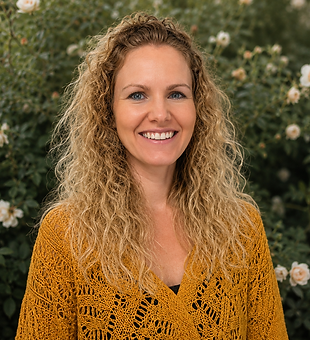
Erin H. Kim, AMFT
EFT for individuals & couples · EMDR-trained · Shame, anxiety & family expectations
Kelley Kuit, LMFT
EFT for individuals & couples · Anxiety, grief & relational trauma
Shannon Bruckbauer, AMFT, APCC
EFT for couples · Relationship & family dynamics, life transitions

FAQ