Behold Counseling
Marriage & Family Therapy
You can love your family and still have needs of your own
Therapy for Asian American and first-generation adults carrying family expectations, cultural pressure, and the quiet weight of holding it all together, with therapists who understand where you come from.
Online across California · In-network with major insurance plans

ASIAN AMERICAN & FIRST-GENERATION THERAPY · CALIFORNIA TELEHEALTH
WHY BEHOLD
Here, you can start with your story instead of explaining your family.
—
We understand the context
Our team includes Asian American therapists who grew up in immigrant families. Duty, sacrifice, and keeping the peace already make sense to us.
—
Room for love and hurt
Your family can be both a source of strength and a source of pain. We help you hold both, and find boundaries that fit your values.
—
Your needs are welcome
Many of us learned that needing help meant being a burden. In therapy, your feelings get space to matter.
Does this sound like you?
Growing up between two cultures can teach you to carry a lot, quietly. Every story is different, but some of this may feel familiar.
“I can’t let them down.”
You carry your parents’ sacrifices with you, and anything less than success feels like ingratitude.
“We just don’t talk about feelings.”
Love in your family was shown more than said. You’re still learning how to put what you need into words.
“I’m the one who holds it together.”
You may have grown up fast, looking after others and learning to handle your own feelings alone.
“Saying no feels like betrayal.”
Even a small boundary with family brings a wave of guilt, so you usually keep the peace instead.
“I don’t fully belong anywhere.”
Too American at home, not American enough elsewhere, you’re still finding who you are in between.
“Maybe I should just push through.”
Therapy may not have been something your family talked about, and part of you wonders if you really need it.
WHAT'S HAPPENING UNDERNEATH
Being “the strong one” isn’t a flaw. It’s how you made it this far.
Growing up in an immigrant family often means learning early to read the room, keep the peace, and need as little as possible. Those skills came from love and necessity, and they’ve carried you a long way.
They can also leave you tired, lonely, and unsure how to let anyone in, even the people closest to you.
Healing doesn’t ask you to choose between your family and yourself. It makes room for both.
How therapy helps
We work with the patterns you learned growing up, at a pace that honors both you and your family.
APPROACHES WE USE: EFT · EMDR · ATTACHMENT-BASED · CULTURALLY RESPONSIVE · INTERGENERATIONAL PATTERNS
01
Make sense of your story
Explore how family, culture, and immigration shaped what you learned about feelings, needs, and worth.
02
Hold gratitude and grief together
Make space for what you didn’t get, while keeping your gratitude for what you did.
03
Find your own voice
Name your needs and set boundaries that feel respectful, not rebellious.
04
Let people in
Practice leaning on the people you love, so closeness starts to feel safe.
A NOTE FROM ERIN
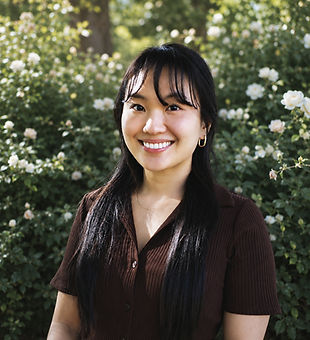
As a Korean American, I know both the strengths and the pressures of an immigrant family: the high expectations, the people-pleasing, the guilt that can come with a boundary. I want therapy to be a place where you feel understood from the very first session.
Erin H. Kim, AMFT · Associate Therapist
A NOTE FROM KELLEY
As the oldest daughter in an immigrant family, I learned to handle things myself, keep my feelings tucked away, and leave little room for mistakes. Therapy taught me to care for my feelings, meet my mistakes with grace, and see vulnerability as strength. You don’t have to figure it out on your own, either.
Kelley Kuit, LMFT · Founder & Clinical Supervisor
Who you'll work with
Both therapists are trained in Emotionally Focused Therapy (EFT) and bring an attachment-based, culturally responsive lens to their work.
Erin H. Kim, AMFT
Kelley Kuit, LMFT
EFT · Anxiety, grief & relational trauma

FAQ